

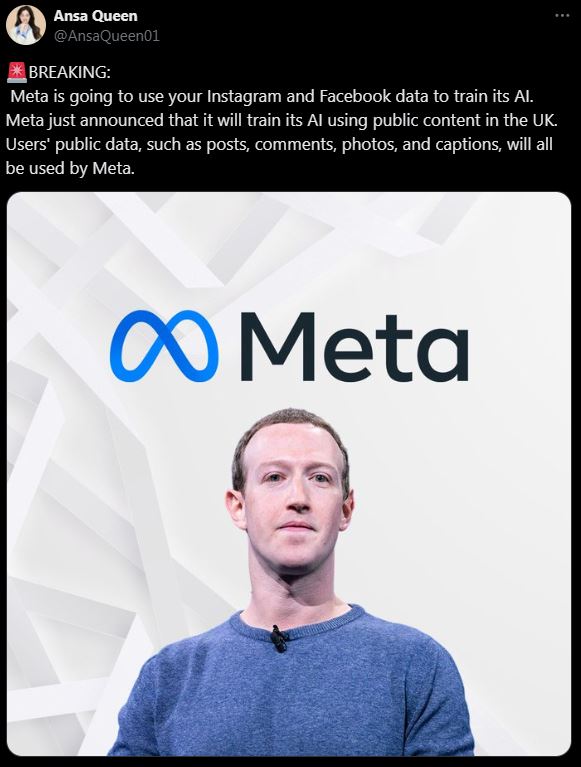
Meta, the parent company of Facebook and Instagram, is once again using publicly available user data in the UK to enhance its AI training models. This comes after a temporary halt due to regulatory concerns and growing public scrutiny over data privacy. The decision to resume data collection, while controversial, reflects the company’s push to refine its AI-driven technologies using real-world social media content to improve the accuracy and cultural understanding of its AI models.
What Data Meta is Collecting
Meta’s data collection for AI training focuses on publicly available posts, which include content shared openly on Facebook and Instagram by users in the UK. The company clarified that it does not use private messages, posts from closed or private groups, or any data from users under the age of 18. Only public posts, comments, and other interactions that are viewable by anyone on the platform are considered for training purposes.
This method of data gathering allows Meta to feed vast amounts of real-world information into its AI systems. These systems aim to better understand language nuances, cultural trends, and social interactions, which in turn improve features like content moderation, recommendation algorithms, and the development of new AI-powered tools. Meta’s decision to resume this data usage reflects its long-term strategy of making its AI systems more adaptable and accurate.
The Role of User Consent and Opt-Out
In response to public backlash over privacy concerns, Meta has implemented changes to make its data practices more transparent and user-friendly. UK users now have the option to opt out of their data being used for AI training. This simplified process allows individuals to manage their data preferences directly from the settings menu on both Facebook and Instagram.
By giving users more control, Meta hopes to alleviate concerns over the potential misuse of personal data. However, critics argue that the opt-out system still places the burden on users, many of whom may not be fully aware of how their public posts are being utilized for AI training.
Regulatory Scrutiny and Broader Implications
Meta’s resumption of AI training with public data in the UK comes amid increasing scrutiny from regulators and governments worldwide. In the UK, regulatory bodies such as the Information Commissioner’s Office (ICO) have kept a close eye on how companies like Meta handle personal data. Meta’s actions also come in the wake of the General Data Protection Regulation (GDPR), a set of stringent data protection laws in Europe designed to give users more control over their personal information.
Meta’s AI training efforts aren’t isolated to the UK; similar initiatives are being rolled out in other regions. In Australia, Meta faced challenges over data usage for AI training, and it’s likely that other countries will soon see similar actions as the company expands its AI capabilities globally.
The Future of AI Training at Meta
As AI becomes increasingly integral to Meta’s platforms, the company’s reliance on user data to train these systems is likely to grow. The company asserts that using public social media posts is critical to improving its AI models, enabling them to better handle tasks like automated content moderation and personalized recommendations.
While the company’s efforts may lead to more refined and culturally aware AI tools, the balance between innovation and privacy remains a hot topic. Meta will need to continue addressing privacy concerns while ensuring that its AI models reflect the diverse and dynamic nature of online communication.
Conclusion
Meta’s decision to resume using public Facebook and Instagram posts for AI training in the UK highlights the ongoing tension between data privacy and technological advancement. With new opt-out features in place, the company aims to give users more control over their data while pushing forward its AI capabilities.